OneSource Online Experience
Role
Lead Designer
Scope
UX Research, Design, Flows, Prototyping
Role
Lead Designer
Scope
UX Research, Design, Flows, Prototyping
Overview
In rare disease, diagnosis often follows a critical, life-altering event. Patients may be in an intensive care unit—overwhelmed, uncertain, and searching for answers.
At the same time, accessing support required navigating outdated workflows: lengthy PDFs, physical signatures, and manual submission processes.
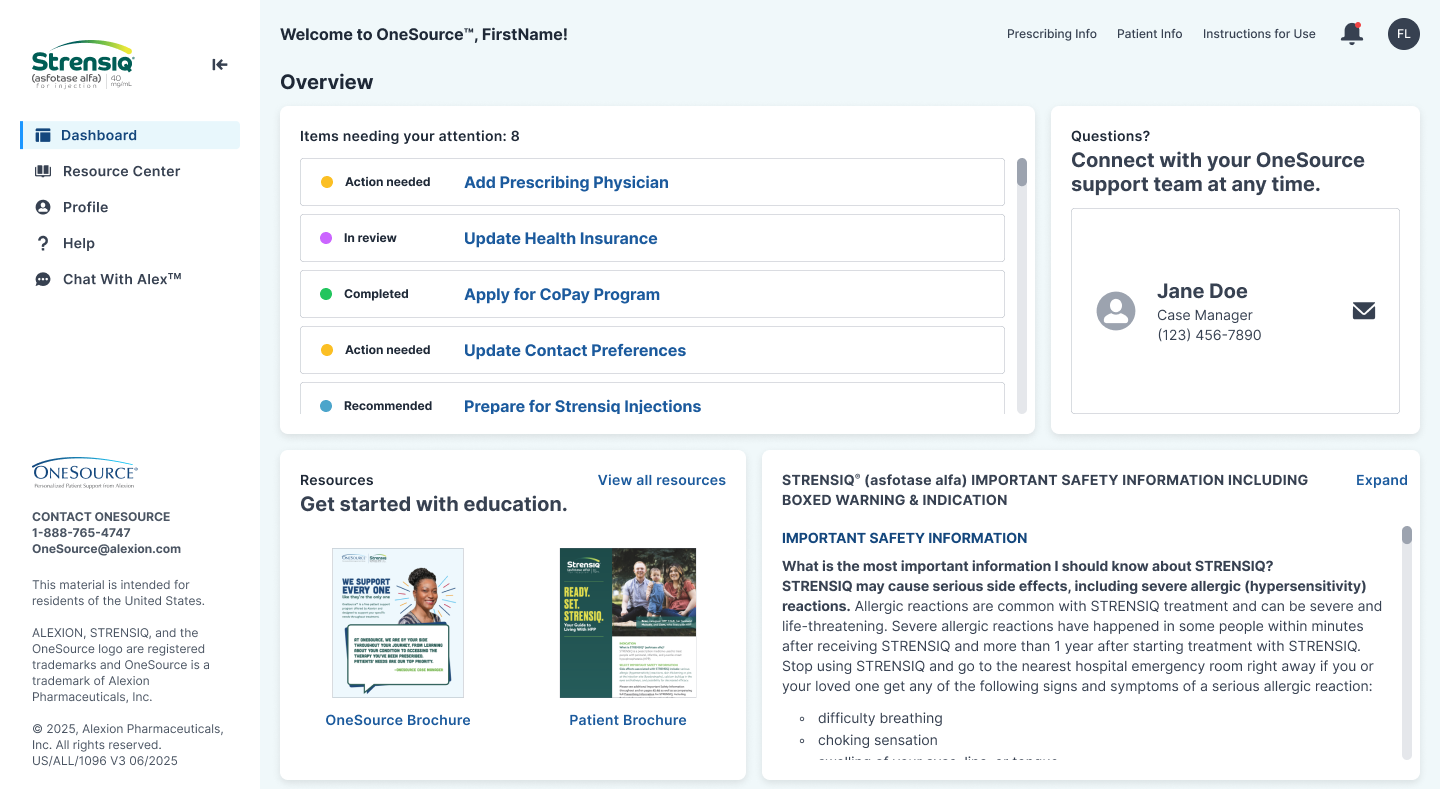
We redesigned onboarding as a streamlined digital experience—connecting patients to a dedicated case manager quickly, and removing friction at the most critical moment.
The result is a more human-centered system that delivers clarity, speed, and support when it matters most.
01 — Problem
Accessing patient support required a manual, multi-step workflow. Patients had to download forms, complete detailed personal and medical information, physically sign documents, and return them via fax or email.
For individuals navigating a critical diagnosis, this created unnecessary friction at the worst possible time.
The system required patients to overcome friction before accessing the very support meant to guide them.
High-friction, paper-based onboarding
02 — Opportunity
The MVP focused on solving the most critical barrier: access.
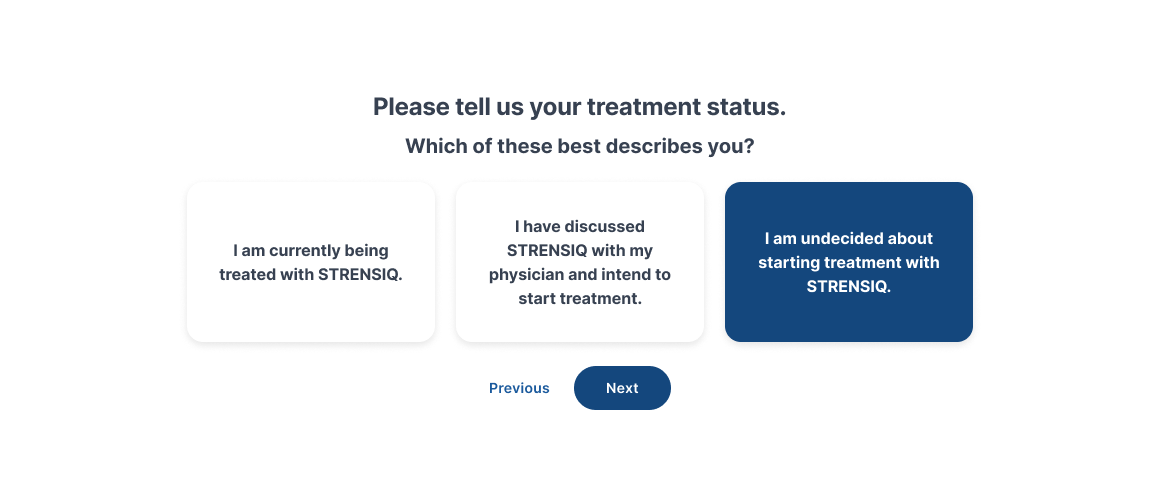
We reimagined onboarding as a guided, step-by-step experience that reduces cognitive load while simplifying complex medical and consent requirements.
Recognizing that patients are not always able to enroll themselves, we introduced a caregiver pathway to ensure continuity of access.
All required actions—including consent and signatures—were embedded directly within the experience, eliminating dependency on external forms.
03 — Key Decisions
Focused onboarding flows
Simplified inputs and structured steps to make complex information more digestible
Embedded signatures
Removed external workflows by integrating consent directly into the experience
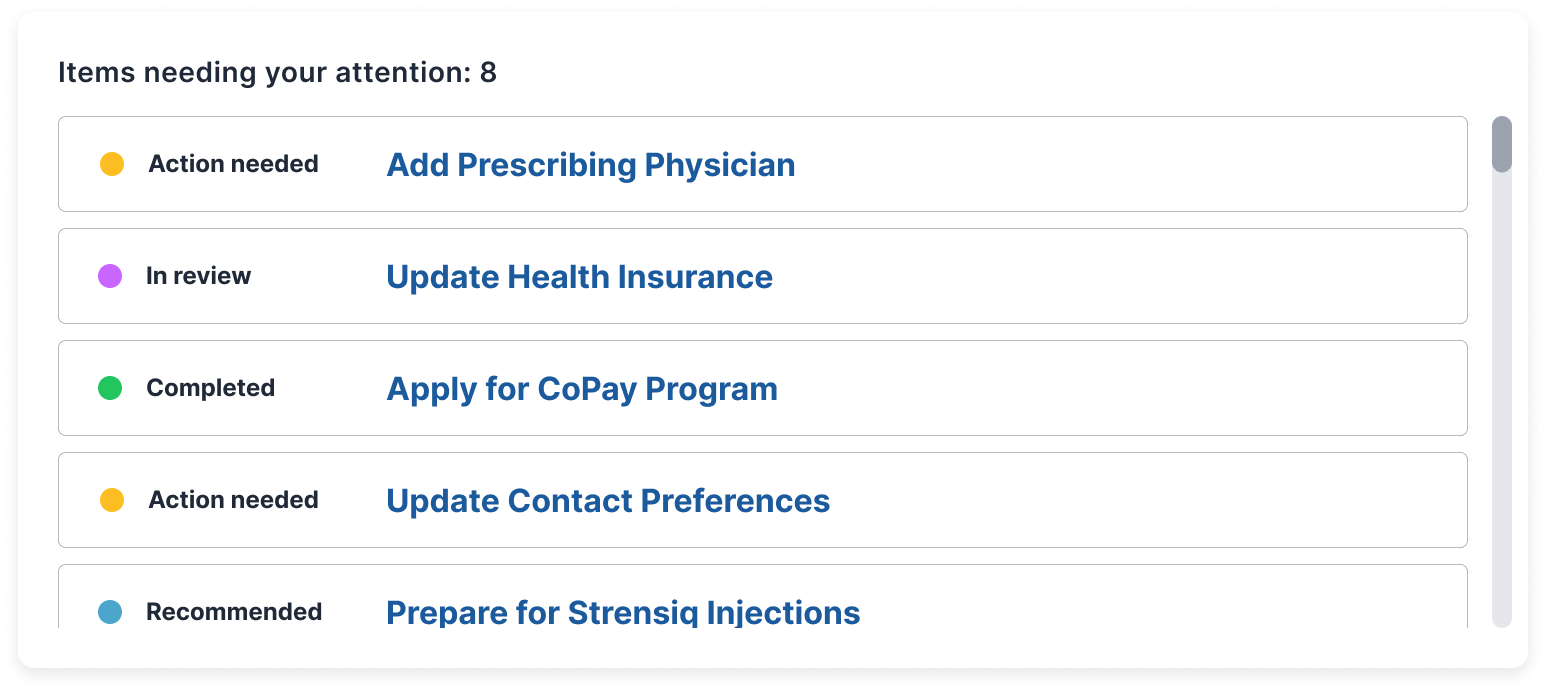
Task-based system
Provided clear visibility into required actions and completion status, reducing uncertainty
04 — Impact
Reduction in enrollment time, enabling connection to case managers within 1 business day
New enrollments in the first week, significant within a rare disease population
Beyond usability improvements, the experience created meaningful operational impact. Faster data intake enabled case managers to track patients more effectively, reduce manual work, and focus more time on delivering personalized support.